TL;DR Summary
Keezhadi and Adichanallur show an early, complex Tamil civilization dating back to roughly 900–600 BCE, with urban traits along the Vaigai and Thamirabarani river systems. 12Kumari Kandam, by contrast, remains a culturally important myth with no geological or archaeological evidence, even as sea-level rise and coastal erosion clearly shaped Tamil Nadu’s ancient shoreline. 3
Introduction
When people talk about “ancient Tamil glory,” two images tend to clash: neatly stratified excavation pits at Keezhadi and Adichanallur on one side, and the imagined vastness of Kumari Kandam on the other. 13 Like a courtroom drama with incomplete CCTV footage, the real question is not whether the past was grand, but what the evidence actually allows us to claim.
This article zooms in on what radiocarbon dates, artefacts and site reports say about early Tamil civilisation, and where that hard data stops—long before any scientific claim of a sunken super-continent becomes plausible. 14
Keezhadi: An Urban Story in the Vaigai Valley
Keezhadi (Keeladi) sits along the Vaigai river, south of Madurai, and has become the poster child for the argument that early Tamil culture was urban, literate, and contemporaneous with the Gangetic plains. 12 Think of it like finding a mini “Harappa-in-the-Deep-South,” except in brick, ring wells, and Tamil-Brahmi sherds rather than baked seals.
Key scientific points from Keezhadi:
- Radiocarbon dating range:
- In 2017, samples sent to Beta Analytic in Miami were dated to about 2,160–2,200 years before present, i.e., broadly 3rd century BCE. 1
- A later set of AMS radiocarbon samples from deeper layers returned a date around 580 BCE for a context at about 3.5 m depth, pushing site occupation into the 6th century BCE. 1
- Nature of settlement:
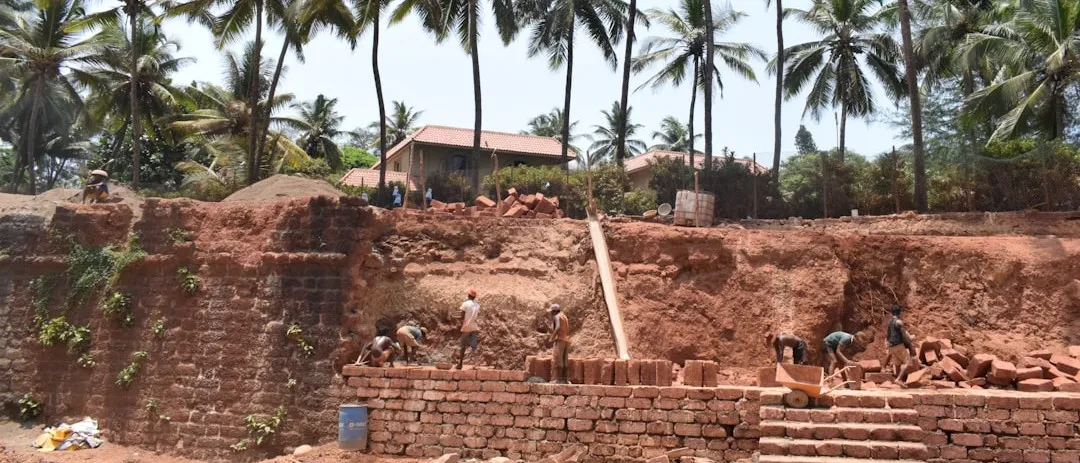
- Official Tamil Nadu archaeology reports describe features like brick structures, ring wells, industrial activity (iron-working, beads), and an organised street-like layout, which fit an “urban” or at least proto-urban settlement along the Vaigai. 56
- Publicly available analyses argue that this “second urbanisation” in the south overlaps chronologically with early historic north India, not thousands of years before it. 2
Put simply: Keezhadi shows a complex, organised settlement with craft specialisation and water management in the mid–1st millennium BCE, not a civilisation from 20,000 or 50,000 BCE. 12
Adichanallur: Older Graves, Different Clues
If Keezhadi is about streets and brickwork, Adichanallur is about urns, bones and metallurgy. 78 Like a time capsule cemetery by the Thamirabarani, it gives sharper hints about social organisation and technology a few centuries earlier than Keezhadi.
Core findings from Adichanallur:
- Dating of the site:
- Cultural significance:
- The carbon-dated window of c. 900–700 BCE makes Adichanallur one of the earliest firmly dated archaeological sites in Tamil Nadu’s Iron Age, slightly older than the currently published Keezhadi levels. 78
- Artefacts include iron objects, decorated pottery, and evidence of sophisticated burial practices, suggesting social hierarchy and ritual complexity. 7
Adichanallur therefore anchors early south Indian Iron Age society in the late 2nd to early 1st millennium BCE—again, ancient, but still well within the Holocene and comparable to other Iron Age societies around the world. 7
What the Dates Actually Say About “Antiquity”
The temptation is to treat any new BCE date as a point in a pride leaderboard. A more scientific way is to see these sites as coordinates in a timeline of human activity in the southern peninsula. 12
Across Keezhadi and Adichanallur, the core evidentiary picture looks like this:
- Both sites cluster between roughly 900 BCE and 200 BCE, depending on layer and context. 12
- Their dates line up with known regional Iron Age and early historic phases, not with Pleistocene or early Holocene epochs where a hypothetical “lost continent civilisation” would need to sit. 14
- This chronology is consistent with broader Indian archaeology, where the south’s Iron Age and early historic phases occupy the late 2nd to early 1st millennium BCE. 74
In other words, the strength of the evidence lies in how neatly it aligns with regional and global archaeological patterns, not in how far back someone can push a single date. 12
Kumari Kandam: Myth, Memory, and the Limits of Geology
Kumari Kandam is often framed as a Tamil equivalent of Atlantis: a vast southern landmass that housed ancient Tamil Sangams before sinking under the sea. 39 Like a powerful origin story for a community, it shapes identity even when it does not match modern geology.
From a scientific point of view:
- Origin of the idea:
- European scientists in the 19th century proposed “Lemuria” as a hypothetical land bridge to explain similar fossils in India and Madagascar; later plate tectonics made this obsolete. 3
- Tamil revivalist writers reinterpreted Lemuria as “Kumari Kandam,” claiming it as an ancient Tamil homeland and cradle of civilisation, often dating it tens of thousands of years in the past. 3
- Evidence status:
- Modern geology, marine surveys, and plate tectonics do not support the existence of a large, now-sunken continent south of India in the late Quaternary. 3
- While sea-level rise after the last Ice Age did submerge coastal areas globally, including around South Asia, this means shrinking coastlines, not the disappearance of an entire continental-scale landmass. 39
So Kumari Kandam today functions mainly as a mytho-historical narrative—emotionally significant, politically useful, but not corroborated by radiocarbon dates or seafloor maps. 39
Pride from Proof: Why Keezhadi and Adichanallur Matter Even Without a Lost Continent
If Kumari Kandam sits in the realm of myth, does that deflate Tamil pride? Scientifically, the opposite picture emerges: pride that rests on verifiable achievement looks more robust than pride that needs a vanished super-continent to feel legitimate. 13
Keezhadi and Adichanallur together show that:
- Tamil-speaking regions hosted complex Iron Age and early historic societies with urban traits, craft specialisation, burial ritual systems, and emerging scripts by the mid–1st millennium BCE. 174
- These societies developed on their own ecological base—river systems like the Vaigai and Thamirabarani—rather than as pale imitations of the north, suggesting independent trajectories of urbanisation. 52
- The judicial and public scrutiny of dating (as in the Madras High Court’s strong remarks on Adichanallur) shows a rare, positive demand for scientific rigour in reconstructing Tamil antiquity. 7
That mix—material evidence, regional distinctiveness and a public insisting on data—is a far more modern and sustainable form of cultural pride. 12
The Nuance Section: Gaps, Controversies, and Open Questions
No serious science story is complete without sitting with what is not yet known. Tamil archaeology is still in the middle of that process, especially around Keezhadi. 17
Important nuances and open issues:
- Dating debates and re-evaluation:
- The Archaeological Survey of India has in recent years discussed revisiting Keezhadi’s periodisation and report structure to improve the clarity of its chronological claims, which indicates that interpretations can and do change as more data arrives. 10
- Differences in how state and central agencies narrate the “significance” of Keezhadi show that archaeology often sits inside political contestation, not outside it. 10
- Limited marine archaeology off Tamil Nadu:
- Interpreting texts versus trenches:
- Sangam literature and later commentaries reference lost lands and deluges, but correlating poetic motifs with stratified archaeological layers is methodologically tricky. 39
- Scholarly analyses that treat kumari-kandam references as cultural memory rather than literal cartography avoid both naive historicisation and easy dismissal. 3
The real frontier now lies in more systematic excavations, better-published datasets, and integration with disciplines like genetics, palaeoenvironmental studies, and high-resolution coastal geomorphology. 12
Footnotes
-
https://www.thenewsminute.com/tamil-nadu/carbon-dating-proves-adichanallur-relics-905-696-bc-madras-hc-slams-asi-99557 ↩ ↩2 ↩3 ↩4 ↩5 ↩6 ↩7 ↩8 ↩9 ↩10 ↩11 ↩12 ↩13 ↩14 ↩15 ↩16
-
https://en.wikipedia.org/wiki/Adichanallur ↩ ↩2 ↩3 ↩4 ↩5 ↩6 ↩7 ↩8 ↩9 ↩10
-
https://5sensestours.com/the-enigma-of-kumari-kandam/ ↩ ↩2 ↩3 ↩4 ↩5 ↩6 ↩7 ↩8 ↩9 ↩10 ↩11
-
https://maduraicorporation.co.in/tourism/keezhadi-civilisation/ ↩
-
https://en.wikipedia.org/wiki/Adichanallur ↩ ↩2 ↩3 ↩4 ↩5 ↩6 ↩7 ↩8 ↩9 ↩10
-
https://www.thenewsminute.com/tamil-nadu/adichanallur-brief-history-one-oldest-archaeological-sites-india-134150 ↩ ↩2
-
https://ijfans.org/uploads/paper/99187b6984e9a1acd31d95f92500d168.pdf ↩ ↩2 ↩3 ↩4 ↩5
-
https://timesofindia.indiatimes.com/city/chennai/indias-second-urbanisation-its-confirmed-keeladi-is-as-old-as-the-gangetic-plains-radiocarbon-dating-traces-sites-origins-to-580bce/articleshow/121817657.cms ↩ ↩2