TL;DR Summary
Tamil Nadu’s Hindu communities transform folk deities into mainstream gods through Sanskritization, a process that functions as a powerful mechanism for status signaling, caste mobility, and economic power assertion. This transformation involves upgrading local rituals to Agamic practices, building grand temples, and aligning with Brahminical traditions to claim higher social status and economic influence.
The process reflects a complex interplay of religious, social, and economic factors, where communities strategically adopt mainstream Hindu practices to challenge caste hierarchies, assert economic power through temple patronage, and signal their elevated status within the social fabric of Tamil Nadu.
Introduction: The God Upgrade Phenomenon
In the villages of Tamil Nadu, a fascinating sociological phenomenon unfolds quietly but powerfully. A local deity worshipped under a tree for generations suddenly gets a stone temple. The simple folk rituals involving chicken sacrifices and trance oracles transform into elaborate Agamic ceremonies with Sanskrit mantras and Brahmin priests. The village goddess Mariamman, once a guardian spirit of boundaries and diseases, gets reimagined as a manifestation of Parvati or Durga.
This isn’t just religious evolution—it’s strategic social mobility in action. Like a startup rebranding to attract venture capital, communities are “upgrading” their folk deities to mainstream Hindu gods to climb the caste ladder, signal newfound economic power, and claim respectability. The question isn’t whether this happens; anthropologists have documented it for decades. The real question is: how exactly does changing your god’s CV translate into real-world status, wealth, and social freedom?
The Folk-Mainstream Spectrum: Where Village Gods Live
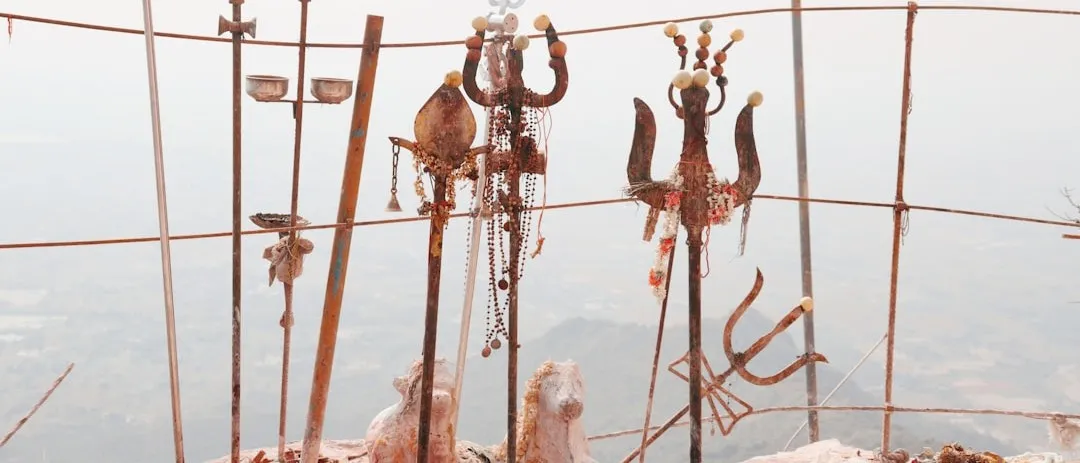
To understand this transformation, picture Tamil Nadu’s religious landscape as a spectrum. On one end sit the gramadevatas—village guardian deities like Aiyanar, Mariamman, Karuppasamy, and Sudalai Madasamy. These gods are intensely local, often tied to specific boundaries, diseases, or community needs. Their worship involves direct, transactional relationships: you give offerings, they protect your crops or cure your smallpox. No Sanskrit required, no Brahmin intermediaries needed.
On the other end stand the mainstream Hindu pantheon—Shiva, Vishnu, Murugan, and the pan-Indian forms of the Goddess. These deities come with elaborate mythologies, Agamic ritual manuals, Brahmin priesthoods, and all-India recognition. They’re the “blue-chip” gods of Hinduism, with established brand value and social prestige.
Most Tamil villages historically operated on the folk end of this spectrum. As the Encyclopedia of Tamil Religion notes, village deities “do not come under the purview of Vedic Religion and Rituals” and share a strong bond with common people. But when communities acquire economic means or political aspirations, they begin moving their deities along this spectrum—what sociologists call Sanskritization.
Sanskritization: The Social Elevator Built on Ritual
The term “Sanskritization” comes from M.N. Srinivas, who observed that lower castes emulate upper-caste practices to improve social status. Think of it like a cultural passport system—adopting the language, dress, food habits, and especially religious practices of dominant castes (traditionally Brahmins) grants access to higher social standing.
In Tamil Nadu, this process accelerated during the Pallava and Chola periods when royal patronage built grand temples and promoted Brahminical worship. But it didn’t stop there. As research from Shanlax Journals shows, the process continues today: “The deities of folk traditions are transformed physically to match the Sakti cult of the mother goddess” while maintaining “cultural survivals, practices, vows, and lore.”
The transformation follows a predictable pattern. First, a community pools resources to build a proper temple structure—moving the deity from a simple shrine to an Agamic-style sanctuary. Next, they invite Brahmin priests to conduct Sanskrit rituals, replacing folk practices. Then, they craft origin stories linking their local deity to mainstream Hindu gods. Finally, they celebrate this with public festivals that display their new status to the entire village.
Case Study: Mariamman’s Makeover
Take Mariamman, the smallpox goddess. Her name literally means “changed mother”—a perfect metaphor for this process. Originally a folk deity associated with disease and rain, Mariamman’s worship centered on protective rituals, fire-walking, and offerings of millet porridge. She was intensely local, with each village having its own Mariamman with specific powers.
As communities grew prosperous, Mariamman began her upgrade. The transformation myth itself tells the story: according to legend, Mariamman was once a mortal woman named Nagavali who was wronged and transformed into a goddess through intense devotion. This narrative of transformation mirrors what her worshippers are doing—changing from ordinary villagers to respectable caste members.
Today, major Mariamman temples like Punnainallur Mariamman in Thanjavur employ Brahmin priests and follow Agamic rituals. As Exotic India Art’s research documents, Mariamman is now “worshipped as a form of Durga, Kali, Parvati, Kamakshi” and other mainstream goddesses. The upgrade is complete: from village guardian to pan-Hindu deity, from folk rituals to Brahminical orthodoxy.
The Nadar Community: From Palm Climbers to Temple Patrons
No story illustrates this mechanism better than the Nadars (historically called Shanars). Two centuries ago, they were palm climbers and toddy tappers, considered a “polluted class” and denied temple entry. Then economic change happened. As Nadar Sangam’s historical records show, they “established a chain of fortified settlements along main trade routes,” built mercantile networks, and created institutions like the Tamil Nadu Mercantile Bank.
With newfound wealth came religious ambition. The Nadars began building grand temples for their traditional deities—Bhadrakali, Mariamman, and village gods. Research from the International Journal of Research and Theological Studies reveals that Nadar community councils “started construction of grand temple premises with Vedic gopurams in every village and town” for both “Central and Peripheral Folk Deities such as Mutharamman, Kaliamman, Mariamman, Ayanar, Karuppasamy.”
This wasn’t just devotion—it was strategic status assertion. By building temples that rivaled those of higher castes, the Nadars signaled their economic power and claimed social respectability. The temples became visible proof of their upward mobility, concrete monuments to their transformed status.
Temple Economics: Where Faith Meets Financial Power
Temples in Tamil Nadu aren’t just spiritual centers—they’re economic institutions. As Tamil Nadu PCS Exam Notes explain, temples function as “landowners, employers, trade hubs, and institutions of redistribution.” They control vast land holdings, generate employment, and stimulate local economies through festivals.
When a community builds a temple, they’re not just constructing a worship space. They’re creating an economic engine that:
- Generates employment for priests, musicians, artisans, and vendors
- Controls land and agricultural revenue
- Attracts pilgrims who spend money locally
- Provides banking and financial services
- Creates networks of patronage and obligation
For upwardly mobile communities, temple ownership becomes a way to convert economic capital into social and religious capital. The temple trust becomes a power center, allowing the community to control resources, dispense favors, and command respect. As one study of temple economy notes, “many were able to acquire or purchase the meritorious and socially valued position of Dharmakarta or temple manager in Tamil Country.”
Status Signaling in Ritual Practice
The transformation of deity worship sends powerful social signals. When a community switches from folk rituals to Agamic practices, they’re broadcasting several messages:
First, they signal economic capacity. Sanskritized rituals require expensive priests, temple infrastructure, and festival financing. Only prosperous communities can afford this “upgrade.”
Second, they signal cultural sophistication. Adopting Brahminical practices shows the community has “arrived”—they understand and can perform the complex rituals of high-status groups.
Third, they signal political ambition. Temple building creates a public platform for leadership, allowing community elites to act as patrons and power brokers.
These signals work because they’re visible and costly. You can’t fake a grand temple or a Brahmin priesthood. The investment required makes the status claim credible.
The Nuance Section: Counter-Narratives and Complications
This analysis requires important caveats. First, Sanskritization isn’t a one-way street. As Asian Ethnology research shows, “the local or Village cults and their deities either get completely merged or remained as major component of the Indian puranic pantheon.” The process is bidirectional—mainstream Hinduism absorbs folk elements while folk traditions adopt mainstream practices.
Second, this transformation doesn’t always succeed. The same research notes that “the natures of Village deities are not easily submissive to anyone,” and many resist complete assimilation. Mariamman still receives offerings of millet porridge and fire-walking rituals even in her most Sanskritized temples. The folk core persists beneath the Brahminical veneer.
Third, the relationship between economic power and religious transformation is complex. While wealth enables Sanskritization, the process itself can create new economic opportunities. It’s not simply that rich communities upgrade their gods—upgrading gods can be a strategy for becoming rich by creating networks, attracting patronage, and establishing economic institutions.
Fourth, modern politics complicates this dynamic. As The Federal reports, “Traditional rituals for folk gods are being replaced with Sanskrit mantras and Hindu mainstream customs, encouraged by right-wing groups.” This suggests external ideological pressures, not just internal community aspirations, drive some transformations.
Finally, this process isn’t universally positive. As one study warns, Sanskritization “was not helped to the subalterns to move up in the social hierarchy. Further it degraded the position of subalterns.” The attempt to emulate higher castes can reinforce the very hierarchies communities seek to escape, creating new forms of discrimination within previously egalitarian folk traditions.
Conclusion: The Living Sociology of Tamil Nadu’s Gods
The transformation of folk deities into mainstream gods in Tamil Nadu reveals religion as a living social institution, not a static set of beliefs. Communities don’t just worship gods—they strategically deploy them as tools for social and economic mobility.
This mechanism works because Tamil society recognizes religious practice as a marker of status. When the Nadars build grand Mariamman temples with Vedic gopurams, they’re not just honoring their goddess. They’re announcing their arrival as a community that commands respect, controls resources, and demands a place at the table of power.
Yet this process remains contested and incomplete. Folk deities resist full assimilation, communities negotiate their identities, and the tension between local traditions and mainstream Hinduism continues to shape Tamil Nadu’s social landscape. The gods may be upgrading, but they’re not surrendering their village roots.