There’s a moment in every person’s life when they spend money on something they don’t need. Not just something unnecessary—something actively impractical. We know it’s irrational. We feel the irrationality even as we swipe the card. Yet we do it anyway, and we keep doing it, across centuries and cultures.
A woman spends $8,000 on a Hermès Birkin handbag when a $50 leather bag holds her belongings equally well. A man buys the latest iPhone despite his old one functioning perfectly. A teenager saves for Supreme sneakers that cost triple their practical equivalent. We’re not discussing addiction or pathology—we’re discussing ordinary, intelligent people making deliberate choices to prioritize vanity over utility.
The puzzle deepens when you realize humans are arguably the most intelligent species on Earth. We’ve split atoms, decoded DNA, and built machines that think. Yet despite this remarkable cognitive capacity, we seem constitutionally incapable of choosing what actually works over what makes us look good. This contradiction isn’t a bug in human nature—it’s a feature, hardwired into our brains by millions of years of evolution.
The Peacock in All of Us
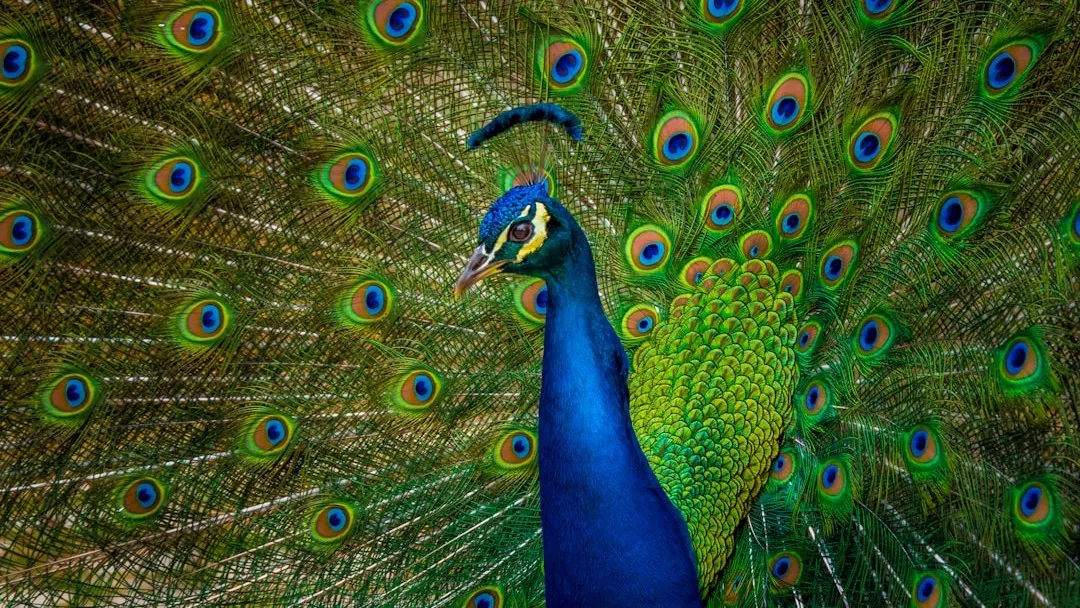
The explanation begins not with humans, but with birds. Male peacocks display tails so elaborate they slow them down, waste enormous energy, and attract predators. By every practical measure, the peacock’s tail is a catastrophic design failure. Yet peahens select males with the most absurd tails, and so these traits intensify through sexual selection, generation after generation.
Evolutionary biologist Amotz Zahavi proposed a revolutionary explanation: the tail exists precisely because it’s impractical. The handicap principle suggests that only genuinely high-quality males can afford to carry such a burden and still survive. The tail is honest advertising—an unforgeable signal of genetic fitness because only the strong can waste resources this spectacularly.1
Humans operate by identical logic. When we buy luxury goods, we’re not irrationally overpaying. We’re performing a costly signal—broadcasting resources, taste, and status to potential mates and social competitors. This behavior persists because it works, evolutionarily speaking. Those who successfully displayed status gained mating opportunities and social power. Those who didn’t got left behind. The trait became fixed in our psychology.2
The intelligence gap is irrelevant here. A brilliant economist buying a luxury watch isn’t making an error in logic. They’re engaging in a hardwired adaptive behavior that bypasses rational calculation entirely. The behavior is perfectly rational within the social context where status genuinely confers advantages—advantages their intelligent brain recognizes subconsciously.
The Modern Marketplace of Signals
Contemporary examples crystallize this dynamic. Apple iPhones cost significantly more than technically superior competitors, yet dominate global markets. Research on consumer behavior reveals that students purchase iPhones primarily for “prestige and social recognition,” not functionality. A competing Android phone might have a better camera and longer battery life, but it carries no signal. The iPhone signals taste, modernity, and access to premium goods.3
This pattern repeats across industries. Limited-edition Supreme sneakers sell for ten times their production cost purely through artificial scarcity and cultural association. The streetwear brand manufactures hype by controlling supply and leveraging influencer networks, creating demand completely divorced from practical value. Consumers understand they’re paying for symbolic capital, not superior shoes. They buy anyway.4
Instagram has industrialized vanity consumption at scale. Research documents that social media influencers drive followers toward conspicuous consumption through fear of missing out and cultivated materialism. The platform creates an endless stream of social comparisons where users see peers displaying luxury experiences and goods, triggering upward social comparison that motivates matching purchases. Each post is a costly signal broadcast to hundreds of observers simultaneously.56
Perhaps the most audacious example is the diamond engagement ring. Before 1947, engagement diamonds barely existed. De Beers, the mining cartel, launched the “A Diamond is Forever” campaign that invented a tradition, emotionally linking diamonds to love and commitment through marketing genius. Within a generation, spending three months of salary on a diamond became an unquestioned cultural norm—not because diamonds are functionally superior to other gemstones, but because they became the accepted costly signal of marital commitment and financial status.7
The Brain’s Betrayal
Here’s where evolution sets the trap. Human brains evolved status-seeking machinery in small bands where your position in the hierarchy determined survival and reproduction. In groups of 150 people, everyone knows who has resources. Costly signals provided reliable information. Your willingness to wear impractical clothing or carry heavy ornaments genuinely advertised something valuable about you.
Modern neuroscience reveals that social validation activates the same reward pathways as food or sex. When you receive a social media “like,” dopamine floods your striatum—the brain region handling motivation and reinforcement. This wasn’t designed for likes; it was designed for status recognition in small groups. Your ancestors who felt rewarded by social position reproduced more successfully than those indifferent to status. Evolution selected for status-addiction.8
The technological environment has transformed these ancestral mechanisms into consumption engines. Your reward system, evolved to track status among 150 neighbors, now processes signals from billions of anonymous strangers. Every luxury purchase provides a dopamine hit through anticipated social recognition. Every branded object becomes a neurological reinforcement of identity and belonging.9
Critically, intelligence provides no protection from these mechanisms. A brilliant economist and a high school dropout feel identical dopamine spikes from luxury purchases. Intelligence just makes post-hoc rationalization more sophisticated. We develop elaborate narratives about “quality craftsmanship” and “investment value” to justify acquisitions our intelligent brains know are primarily about status. The rationalization isn’t a bug—it’s how intelligence serves vanity.
The Evolutionary Mismatch
This phenomenon represents an evolutionary mismatch: psychological mechanisms perfectly adapted to ancestral conditions persisting in a radically transformed environment. Our status-seeking machinery was calibrated for scarcity. In ancestral environments, wasteful consumption genuinely signaled access to rare resources. In modern markets of abundance, the same impulses drive cycles of escalating consumption where signals depreciate rapidly.10
Yesterday’s status symbol becomes today’s commodity. The iPhone was revolutionary in 2007; by 2015, owning one signaled nothing except baseline wealth. This created a treadmill effect where consumers must constantly acquire newer, rarer, more exclusive items to maintain the same signal intensity. Meanwhile, happiness remains largely unaffected. Research on the hedonic treadmill demonstrates that luxury consumption provides temporary satisfaction quickly returning to baseline happiness levels.11
The intelligence paradox deepens further when we recognize this limitation. We understand intellectually that luxury goods don’t increase life satisfaction. We know the happiness bump is temporary. We comprehend the economic waste and environmental cost of conspicuous consumption. Yet this knowledge barely affects behavior.
Why This Matters
Accepting the vanity-utility paradox reframes how we understand human nature. We’re not broken. We’re not failing to apply rationality correctly. We’re evolved organisms deploying ancient status-signaling mechanisms in a novel environment where those mechanisms become self-defeating at scale.
This changes everything about how we approach personal finance, marketing, environmental sustainability, and social competition. It explains why willpower fails against consumption temptation—you’re not fighting logic, you’re fighting neurobiology. It clarifies why luxury brands thrive despite objectively wasteful products: they’re selling neurological rewards, not functionality.
For the intelligent individual aware of these mechanisms, the path forward isn’t shame-based resistance. It’s honest acknowledgment: we are, fundamentally, peacocks with smartphones. We display rather than calculate. We signal rather than optimize. We choose vanity not despite our intelligence but partly because of it—our clever brains can rationalize anything.
The question isn’t whether we can overcome this tendency. The question is whether we can design social environments that channel status-seeking toward less destructive signals. Until we do, intelligence remains a tool that makes us better at justifying what our evolution demands.