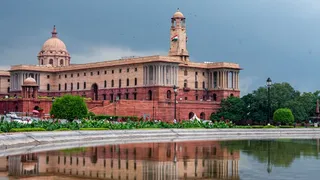
Since assuming office in March 2017, Yogi Adityanath has fundamentally transformed Uttar Pradesh’s governance architecture, delivering measurable improvements in law enforcement, infrastructure development, and economic growth while simultaneously raising serious concerns about civil liberties, minority rights, and democratic norms. This assessment examines the administration’s impact across eight years (2017-2025) through quantitative metrics, institutional reforms, and socio-political consequences.
The administration has achieved demonstrable progress in reducing crime rates, expanding infrastructure, attracting investment, and improving fiscal management. Uttar Pradesh’s GSDP grew at 11.6% in 2023-24—exceeding the national average of 9.6%—while the state budget expanded to ₹8.08 lakh crore, 2.5 times larger than in 2016-17. Crime statistics show a 70.1% reduction in dacoity, 52% decline in rape cases, and zero communal riots recorded in 2023 per NCRB data. The state moved from 12th to 2nd position in Ease of Doing Business rankings between 2017 and 2019.12
However, these gains coexist with troubling patterns: allegations of extrajudicial killings (256 deaths in 15,726 encounters), systematic targeting of minorities through “bulldozer justice” condemned by the Supreme Court as “inhuman and illegal”, press freedom violations, and caste-based violence against Dalits (15,368 cases in 2022, highest in India). The administration’s governance model prioritizes rapid development and assertive law enforcement but raises fundamental questions about constitutional values, due process, and inclusive growth.34
Law and Order: Transformation Through Force
Crime Reduction and Statistical Performance
The Yogi Adityanath administration has achieved its most visible success in transforming Uttar Pradesh’s law and order situation. Between 2017 and 2025, the state conducted 15,726 encounters resulting in 256 criminals killed, 31,960 arrested, and 10,324 injured. This aggressive approach has delivered measurable crime reductions:3
- Dacoity cases declined by 70.1%
- Loot incidents decreased by 69.3%
- Murders fell by 29.1%
- Rape cases dropped by 52%
- Kidnapping reduced by 41%
- Dowry deaths decreased by 11.6%1
Uttar Pradesh’s overall crime rate stands at 335.3, significantly below the national average of 448.3. The state recorded zero communal riots in 2023 according to NCRB data—described as “unprecedented in recent history”—compared to over 1,400 riots with 300+ deaths between 2007 and 2017. Organized crime declined by 35%, while kidnapping for ransom and contract killings fell by 40% and 45% respectively.5
The administration seized properties worth over ₹20,000 crore from mafia networks and invoked the National Security Act (NSA) against 930 criminals. Over 10,000 criminals surrendered out of fear of the state’s strict policies, while 79,984 individuals were prosecuted under the Gangsters Act. High-profile criminal-politicians like Mukhtar Ansari, Atiq Ahmed, and Azam Khan faced severe legal action, dismantling the political-criminal nexus that had plagued the state for decades.61
The Dark Side: Human Rights Violations and Extrajudicial Justice
This transformation came at a substantial human cost that raises grave constitutional concerns. UN human rights experts expressed alarm over at least 59 extrajudicial killings by police between March 2017 and September 2020, noting patterns of abduction or arrest before killing, bodies bearing torture marks, and failure to follow Supreme Court guidelines on investigations. The Supreme Court of India has issued multiple scathing rulings against Uttar Pradesh’s law enforcement practices:7
Bulldozer Justice: In April 2025, a Supreme Court bench comprising Justices AS Oka and Ujjal Bhuyan condemned the Prayagraj Development Authority for unlawfully demolishing homes, calling it “inhuman and illegal” and imposing a ₹60 lakh penalty. The judgment stated: “This is one more case of bulldozer justice. The officers of PDA have forgotten that the rule of law prevails in our country.” The Court emphasized that demolitions demand strict adherence to procedural safeguards—at least 15 days’ notice after service and opportunity for appeal—none of which were provided.8
In November 2024, a three-judge bench declared that bulldozer demolitions “subvert the authority of courts” and “remind of a lawless, ruthless state of affairs,” warning that such actions violate natural justice, citizens’ right to shelter, and inflict collective punishment on families. Critics document that properties demolished often belong to Muslims, executed without notice under anti-encroachment pretexts following communal incidents—functioning as punitive theatre rather than lawful urban regulation.910
Misuse of Criminal Law: Chief Justice Sanjiv Khanna warned in April 2025 of imposing costs on UP Police for routinely converting civil disputes into criminal cases, stating: “What is happening in UP? Every day civil suits are being converted to criminal cases. That’s not correct. That is the breakdown of rule of law completely.”11
Encounter Deaths: The state’s “thok do” (shoot down) policy has been criticized as prioritizing brute force over due process. While defended as self-defense, critics label many incidents as “fake encounters” involving non-hardened criminals. The 18 police personnel martyred and 1,754 injured in these operations underscore the intensity of this enforcement approach, yet the disproportionate casualty ratio (256 criminals killed vs. 18 police deaths) raises questions about operational conduct.9
Targeting Dissent: A 2022 report by the Committee Against Assault on Journalists documented that since 2017, at least 48 journalists were physically assaulted and 66 others booked or arrested. The administration issued orders directing officials to seek explanations from media houses for “twisted” or “false” reporting, creating a chilling effect on press freedom ahead of elections. Independent journalist Sanjay Sharma documented intimidation tactics including eviction from residence, cancellation of government committee memberships, and withdrawal of advertising.12
Economic Development: Growth Engine of India
Macroeconomic Performance
Uttar Pradesh has emerged as one of India’s fastest-growing state economies under Yogi Adityanath. The state’s GSDP grew at 11.6% in 2023-24 compared to India’s 9.6%, reaching ₹25.48 lakh crore from ₹22.58 lakh crore the previous year. The agriculture sector’s contribution to GSDP increased from 13.7% to 16.8% in FY 2023-24, while agricultural growth rates jumped from 5% in 2016-17 to over 13.5%.213
Per capita income nearly doubled from 2016-17 levels, with the state witnessing a 23% increase between FY 2016-17 and FY 2019-20. The state budget of ₹8,08,736 crore represents a 2.5-fold increase from 2016-17, with ₹2.25 lakh crore allocated solely for capital expenditure. Uttar Pradesh’s contribution to national tax revenue grew from 9.9% in 2022-23 to projected 11.6% in 2024-25.13
A comparative analysis with the previous Samajwadi Party government reveals mixed results. In absolute terms, GDP increased by ₹5 lakh crore under Yogi Adityanath versus ₹2.8 lakh crore under Akhilesh Yadav—approximately 80% more. However, when adjusted for inflation, the picture becomes more complex. The Print’s data analysis showed average annual growth in agricultural output was 9.1% under Akhilesh versus 8.6% under Yogi’s first term, while manufacturing grew by 14.6% under Akhilesh compared to just 0.6% under Yogi. Independent economist analysis suggests that accounting for base effects, Yogi’s annual pace drops to 3.5%, representing a 90 basis points underperformance versus the national average.1415
Foreign Direct Investment and Industrialization
Foreign Direct Investment inflows surged dramatically—₹11,000 crore between 2019 and 2023 compared to merely ₹3,000 crore between 2000 and 2017. The state rose to 11th position among Indian states for FDI attractiveness, with total inflow of $1.7 billion from October 2019 to September 2024. Uttar Pradesh ranks first nationally for consumer electronics exports, hosting 196 Electronics System Design and Manufacturing (ESDM) companies.16
The UP Investors Summit 2018 attracted investment proposals worth ₹4.28 lakh crore, while the 2023 Global Investors Summit drew commitments of ₹33.50 lakh crore. Over 16,000 projects were initiated across four Groundbreaking Ceremonies, with more than 8,000 already operational. The manufacturing sector received 62.25% of total investment.16
MSME Development: One District One Product (ODOP)
The ODOP initiative launched in January 2018 represents one of the administration’s most innovative economic interventions. Covering all 75 districts, the program creates product-specific traditional industrial hubs to promote indigenous handicrafts and local manufacturing. ODOP has directly created employment for 1.50 lakh people through margin money assistance to artisans and entrepreneurs.17)18
Six Common Facility Centres are functional with 23 under implementation, providing design labs, testing facilities, raw material banks, and upgraded production setups. The program has facilitated partnerships with major e-commerce platforms like Amazon and Flipkart, providing direct market access to artisans. Products manufactured under ODOP have been gifted to world leaders during bilateral meetings and G20 presidency, promoting Indian handicrafts internationally.19
Agricultural Revival and Farmer Welfare
The sugar industry exemplifies the administration’s agricultural turnaround. Once on the verge of collapse with closed mills, the government revived six shut sugar mills, established three new ones, expanded 38 others, and now operates 122 functional mills. Critically, sugarcane farmers received over ₹2.8 lakh crore in payments from 2017 to 2025—₹75,000 crore more than payments between 1996 and 2017. The Fair and Remunerative Price (FRP) increased progressively from ₹285 per quintal in 2020-21 to ₹355 per quintal for 2025-26.2021
The state implemented 31 irrigation projects, distributed ₹90,000 crore to farmers under PM Kisan Samman Nidhi, and provided free electricity connections to 15 lakh tube wells. Agricultural exports expanded through the Export Promotion Board, while farmers benefited from crop diversification and improved market access.22
Infrastructure: The Expressway State
Transportation Revolution
Uttar Pradesh’s infrastructure transformation has been dramatic and visible. Metro rail services expanded from zero operational cities in 2017 to six cities (Lucknow, Kanpur, Noida, Agra, Meerut, and Ghaziabad) with a total network of 147.446 km. The Kanpur Metro, completed within 24 months, became the world’s fastest constructed and commissioned metro project. Metro projects are under development or advanced planning for Varanasi, Gorakhpur, Bareilly, Jhansi, and Prayagraj.23
Airport infrastructure multiplied from two functional airports (Lucknow and Varanasi) in 2017 to 16 airports across the state. The Noida International Airport at Jewar—set to be India’s largest—will be inaugurated in January 2026.24
The state’s expressway network underwent unprecedented expansion. Seven expressways are fully operational, including the Yamuna Expressway, Agra-Lucknow Expressway, Purvanchal Expressway, and Bundelkhand Expressway. Nine additional expressways totaling over 900 km are proposed or under development, which will give Uttar Pradesh control over 7% of India’s entire expressway network—the largest state network in the country. The Ganga Expressway alone will be 594 km long upon completion.25
These projects have directly generated massive employment during construction and post-construction phases while making Uttar Pradesh a preferred investment destination, especially in manufacturing, logistics, warehousing, and agro-processing sectors.25
Power Supply and Basic Amenities
The state achieved near-universal 24x7 power supply in urban areas and district headquarters, with 18-20 hours supply in rural areas and tehsil towns. Over 15 lakh tube wells received free electricity connections. Under Har Ghar Jal scheme, clean drinking water reached households across the state, while over 2.62 crore toilets were constructed under Swachh Bharat Abhiyan.2622
Healthcare and Education: Expansion with Quality Concerns
Medical Education Transformation
The healthcare sector witnessed quantitative expansion, with medical colleges increasing from 12 (pre-2017) to 80+, comprising 44 government and 36 private institutions. MBBS seats expanded to 11,903 across 86 colleges, while postgraduate medical seats reached 3,652. Two AIIMS facilities in Gorakhpur and Rae Bareli were operationalized. Uttar Pradesh achieved first position nationally in Ayushman Bharat scheme implementation.2728
However, quality and accessibility concerns persist. The state ranks fourth from bottom in SDG 3 (Good Health and Well-being), indicating that infrastructure expansion has not translated into proportionate health outcomes. The COVID-19 pandemic exposed critical weaknesses—in April 2021, multiple hospitals in Lucknow faced acute oxygen shortages, with Mayo Medical Centre and Makewell Hospital issuing notices asking families to shift patients due to supplies lasting only hours. While the government denied deaths due to oxygen shortage, patient testimonies and media documentation suggested otherwise.2930
Education: Modest Progress, Persistent Gaps
Literacy remains below the national average at 67.7% (Census 2011), with significant gender disparities—male literacy at 77.28% versus female literacy requiring substantial improvement. The state performed above the national average in PARAKH Rashtriya Sarvekshan 2024 for both Language and Mathematics, registering 4% higher scores in each, indicating improving learning outcomes.31
Reforms include smart classrooms, ICT@Schools program, digital attendance systems, and alignment with National Education Policy (NEP) 2020. Initiatives like the Gyanodaya Programme focused on teacher empowerment and learner-centric pedagogy. However, dropout rates remain high at secondary and higher secondary levels, particularly among girls, driven by poverty, child labor, and early marriage. The digital divide became starkly visible during COVID-19, with many rural students unable to access online education.32
Social Welfare and Women’s Safety
Mission Shakti and Women’s Empowerment
The administration launched Mission Shakti as a comprehensive women’s safety initiative, currently in its fifth phase. The program deploys 44,177 women police personnel across 57,000 village panchayats and 14,000 urban wards. Anti-Romeo Squads—plainclothes police units—patrol public spaces, colleges, parks, and markets to prevent harassment.33
The state’s Women Helpline 1090 remains fully operational with prompt response mechanisms. Mission Shakti’s earlier phase reached 2.03 crore women through 3.44 lakh programs. Operations targeted cybercrime, child rescue, drug offenses, and illegal activities, resulting in thousands of arrests.33
Social welfare schemes include Mukhyamantri Kanya Sumangala Yojana (financial aid for girl children), Ujjwala Yojana (1.86 crore LPG connections), and Pradhan Mantri Awas Yojana (56 lakh houses for the poor). Despite these initiatives, the state scored 42 in SDG 5 (Gender Equality)—second to last among all states—with performance declining from 50 points in 2020-21.301
Sustainable Development Goals: Uneven Progress
Uttar Pradesh moved from ‘Performer’ to ‘Front Runner’ category in the SDG Index, climbing from 29th to 18th place nationally with a score improvement from 42 (2018-19) to 67 (2023-24)—a 25-point jump representing the most significant improvement by any state. The state achieved a perfect score of 100 in SDG 7 (Affordable and Clean Energy).30
However, critical gaps persist:
- SDG 1 (No Poverty): Scored 57, ranking fourth from bottom30
- SDG 3 (Good Health): Fourth lowest ranking30
- SDG 5 (Gender Equality): Score of 42, second to last, declining from 50 in 2020-2130
- SDG 8 (Decent Work and Economic Growth): Fourth lowest30
Positive movements occurred in SDG 10 (Reduced Inequalities), increasing from 41 to 66, and SDG 13 (Climate Action), rising from 39 to 52.30
The Communal Dimension: Polarization and Minority Insecurity
Systematic Targeting and Religious Polarization
The Yogi Adityanath administration’s approach to communal relations represents perhaps its most controversial dimension. Experts characterize the governance model as explicitly leveraging Hindu-Muslim polarization for electoral advantage. Political scientist analysis suggests that “for his diehard supporters, it’s not important what Yogi Adityanath does for them, but what he does against Muslims—the people they look at with suspicion.”34
The administration brought in controversial legislation against interfaith marriages, arbitrarily shut down abattoirs and meat-serving restaurants (predominantly Muslim-owned), and conducted selective demolitions primarily targeting Muslim properties following communal incidents. The Citizenship Amendment Act (CAA) protests in 2019-2020 were met with harsh crackdowns—the state filed FIRs against over 1,000 individuals including women, sought damage recovery from accused protesters, and allegedly used excessive force.3534
Case Study: Bahraich Violence (2024)
The October 2024 communal violence in Bahraich district exemplifies the administration’s handling of religious tensions. Violence erupted during Durga idol immersion when a dispute over music escalated, resulting in 22-year-old Ramgopal Mishra being shot dead. Following CM Adityanath’s warning that “those attempting to disturb peace will not be spared,” a coordinated response ensued: mass vandalism, arson targeting shops and hospitals, 30 arrests, NSA invoked against 13 accused, and ultimately, death penalty for the shooter with life imprisonment for nine others.3637
Critics argue this represented collective punishment and selective targeting of Muslims, while the government maintained it demonstrated zero tolerance for communal violence and ensured swift justice. The incident reinforced communal divisions rather than promoting reconciliation.36
Lakhimpur Kheri Incident (2021)
During the 2020-21 farmers’ protests, the October 2021 Lakhimpur Kheri incident exposed another dimension of state response to dissent. Four farmers and a journalist were run over by vehicles allegedly belonging to Union Minister Ajay Mishra Teni’s convoy, while three BJP members were subsequently lynched in retaliation—eight total deaths. Opposition leaders labeled it a “terror attack,” while farmer unions demanded the minister’s dismissal.38
The government’s perceived protection of Minister Teni (who remained in his post for an extended period) and slow justice delivery contributed to perceptions of political bias and impunity for powerful interests. Farmer protests continued for months demanding accountability.39
Caste Violence and Dalit Marginalization
Despite constitutional protections, caste-based violence against Dalits increased alarmingly under the BJP government. Uttar Pradesh reported 15,368 cases of atrocities against Dalits in 2022—the highest in India and a 16% increase from 13,146 in 2021. Between 2009 and 2018, UP accounted for 22.4% of cases registered under the Prevention of Atrocities Act nationwide.40
Scholars document that Dalit women have become particular targets in caste battles. Sexual violence against Scheduled Caste women increased 21% between 2015 and 2019—the second-highest increase nationally after Rajasthan. Incidents across Hathras, Unnao, Shravasti, Jaunpur, and other districts reveal patterns where upper-caste perpetrators (often Thakurs—Adityanath’s own caste) attack Dalits over land disputes, political contests, or assertions of dignity.41
The infamous Hathras case—where a 19-year-old Dalit woman died after gang rape by upper-caste men, followed by state authorities’ midnight cremation without family consent—crystallized concerns about systemic bias. Activists charge that “the political will is to protect upper caste offenders and help them assert authority over Dalits. Mob lynchings, attacks on communities, rape and murder has become commonplace.”40
Electoral Politics: Landslide Victories and Polarized Mandates
The Yogi Adityanath administration achieved historic electoral success. In the 2017 Assembly elections, BJP secured 312 seats (77.4% of the 403-seat assembly) with 39.67% vote share—a 24.7 percentage point increase from the previous election. This represented the first time since 1980 that a single party won an absolute majority in Uttar Pradesh.42
The 2022 Assembly elections delivered another decisive mandate with BJP winning 255 seats and allies securing 19 more for a total of 274—defying conventional wisdom that incumbents never return in UP. Adityanath personally won his Gorakhpur Urban constituency by a margin of 1,03,000+ votes. This marked the first time since 1985 that an incumbent Chief Minister completed a full term and was re-elected.43
The electoral strategy combined developmental narrative (infrastructure, welfare schemes), law and order messaging, and religious polarization. As political analysts observed, BJP succeeded in polarizing voters along religious lines while also building a narrative around law enforcement and women’s safety.44
The Mahakumbh 2025: Governance Showcase
The organization of Mahakumbh 2025 in Prayagraj (January 13 - February 26, 2025) represented the administration’s most ambitious logistical undertaking. Expected to attract over 400 million pilgrims, the event required creation of a temporary city with 2,000+ tents, 2,69,000 checkered plates for pathways, mobile toilets, 24x7 waste management, and dedicated medical services.451
Infrastructure preparations included widening and strengthening of 92 roads, beautification of 40 junctions and 48 roads, development of ROBs and flyovers, beautification of 29 temples, development of 11 corridors, and extensive CCTV and crowd monitoring systems. The administration coordinated accommodation, transportation, security, sanitation, and emergency services for what is described as the world’s largest public gathering.45
CM Yogi Adityanath emphasized meticulous planning and interdepartmental coordination, positioning Mahakumbh as a demonstration of administrative capability and cultural-spiritual resurgence under his leadership.1
Analytical Synthesis: Development Through Authoritarianism
The Yogi Adityanath administration presents a governance model characterized by decisive executive action, rapid infrastructure development, fiscal discipline, and assertive law enforcement—delivered alongside systematic erosion of civil liberties, minority rights, and democratic accountability mechanisms.
Structural Achievements
The administration’s successes are undeniable in specific domains:
- Law and Order Restoration: Crime rates declined substantially, organized mafia networks dismantled, and public perception of safety improved measurably
- Infrastructure Acceleration: Metro systems, airports, expressways, and power supply expanded at unprecedented pace
- Fiscal Management: Budget discipline, increased capital expenditure, and improved revenue generation
- Investment Attraction: FDI increased nearly 4-fold compared to previous decades, ease of doing business improved dramatically
- Agricultural Revival: Sugarcane payments reached farmers, sugar industry revived, agricultural growth accelerated
Systemic Concerns
However, these gains coexist with troubling patterns that undermine constitutional governance:
- Extrajudicial Violence: 256 encounter killings, Supreme Court condemnation of bulldozer justice, systematic violations of due process
- Minority Targeting: Selective demolitions, CAA protest crackdowns, communal polarization as electoral strategy
- Press Freedom Erosion: Journalist attacks, criminal cases against reporters, orders to “explain” critical coverage
- Caste Violence: Highest Dalit atrocity cases nationally, inadequate protection for marginalized communities
- Democratic Deficit: Suppression of dissent, conversion of civil matters to criminal cases, intimidation of opposition
The Developmental Authoritarian Model
The administration exemplifies “developmental authoritarianism”—delivering economic growth and infrastructure through centralized, top-down governance that circumvents democratic checks and balances. This model prioritizes speed and visibility over consultation and inclusion, generating tangible outputs (expressways, metros, reduced crime) while eroding intangible democratic goods (press freedom, minority security, judicial independence).
The Supreme Court’s repeated interventions—condemning bulldozer justice, warning against misuse of criminal law, imposing penalties for illegal demolitions—indicate that developmental gains have been achieved partly through unconstitutional means. As the Court observed: “The officers have forgotten that the rule of law prevails in our country.”8
Uneven Development and Exclusion
Despite macroeconomic growth, Uttar Pradesh continues ranking near bottom nationally in poverty reduction (SDG 1), health outcomes (SDG 3), gender equality (SDG 5), and decent work (SDG 8). The state’s economic expansion has not translated into proportionate improvements in human development indicators, suggesting that growth benefits have been unevenly distributed.30
For the state’s 40 million Muslims and 44 million Dalits, the Yogi era represents heightened insecurity despite infrastructure gains. Systematic targeting through demolitions, encounter killings disproportionately affecting Muslims, and inadequate response to caste violence indicate that development has proceeded alongside deliberate exclusion and persecution of marginalized communities.441
Conclusion: Legacy of Transformation and Transgression
Yogi Adityanath’s eight-year tenure has fundamentally transformed Uttar Pradesh’s physical infrastructure, fiscal health, and law enforcement capacity. The state has emerged from the “BIMARU” categorization to become a significant contributor to India’s GDP, attracting substantial investment and delivering visible improvements in connectivity, power supply, and urban development.
However, this transformation has been achieved through methods that systematically violate constitutional principles, undermine judicial independence, target minority communities, and suppress democratic dissent. The administration has normalized extrajudicial violence, weaponized administrative machinery against political opponents and critics, and explicitly leveraged communal polarization for electoral advantage.
The governance model prioritizes order over justice, development over rights, and majority consolidation over pluralistic accommodation. While effective in delivering infrastructure and maintaining surface stability, it raises fundamental questions about the sustainability and moral legitimacy of development achieved through authoritarian means.
For policymakers, the Yogi Adityanath administration offers a case study in the trade-offs between developmental efficiency and democratic values. The measurable gains in crime reduction, infrastructure expansion, and economic growth must be weighed against equally measurable costs in human rights violations, minority insecurity, press freedom erosion, and judicial system subversion.
Ultimately, Uttar Pradesh under Yogi Adityanath demonstrates that rapid development is possible through centralized, assertive governance—but at the cost of transforming India’s most populous state into a testing ground for majoritarian politics and authoritarian developmentalism that challenges the constitutional framework envisioned by India’s founders.
464748)
The challenge for future administrations, and indeed for India’s democratic fabric, lies in reconciling these competing narratives. Can accelerated development be achieved without sacrificing the foundational principles of justice, equality, and civil liberties? Or is Uttar Pradesh’s model a harbinger of a new form of governance where the promise of material progress overshadows the imperative of democratic accountability? The long-term implications of Adityanath’s tenure will depend on whether its developmental achievements can endure without the coercive apparatus that brought them about, and whether the erosion of democratic norms permanently alters the state’s socio-political landscape. The eight-year assessment reveals a complex legacy: one of undeniable efficacy in certain sectors, yet deeply concerning implications for the health of India’s democracy and its commitment to inclusive development.
Footnotes
-
https://www.freepressjournal.in/india/ncrb-data-highlights-sharp-decline-in-crime-better-law-order-in-uttar-pradesh ↩ ↩2 ↩3 ↩4 ↩5 ↩6
-
https://invest.up.gov.in/wp-content/uploads/2023/12/FDI-500-Booklet_161223.pdf ↩ ↩2
-
https://economictimes.com/news/india/in-a-week-of-rebukes-supreme-court-slams-ups-bulldozer-justice-police-overreach/articleshow/120289442.cms ↩ ↩2
-
https://article-14.com/post/in-uttar-pradesh-the-yogi-govt-s-war-against-journalists-is-chilling-free-speech-618c8e968b2d1 ↩ ↩2
-
https://organiser.org/2025/07/22/303762/bharat/yogiraj-in-uttar-pradesh-ramrajya-in-action-fear-for-criminals-faith-for-citizens/ ↩
-
https://theprint.in/india/governance/222-mafias-killed-930-booked-under-nsa-yogi-8-yr-report-card-leans-heavily-on-improved-law-order/2562920/ ↩
-
https://www.newsclick.in/un-experts-alarmed-extra-judicial-killings-yogi-adityanath-ruled ↩
-
https://economictimes.com/news/india/in-a-week-of-rebukes-supreme-court-slams-ups-bulldozer-justice-police-overreach/articleshow/120289442.cms ↩ ↩2
-
https://cjp.org.in/from-slogan-to-sanction-how-a-chief-ministers-words-hardened-into-punitive-policing-after-the-i-love-muhammad-row/ ↩ ↩2
-
https://www.scobserver.in/journal/bulldozer-demolitions-remind-of-a-lawless-ruthless-state-of-affairs-declares-supreme-court-as-it-issues-pan-india-guidelines/ ↩
-
https://economictimes.com/news/india/in-a-week-of-rebukes-supreme-court-slams-ups-bulldozer-justice-police-overreach/articleshow/120289442.cms ↩
-
https://www.newsclick.in/negative-news-new-spin-control-media ↩
-
https://www.drishtiias.com/state-pcs-current-affairs/up-second-fastest-growing-economy ↩ ↩2
-
https://theprint.in/economy/did-up-economy-do-better-under-akhilesh-than-yogi-a-data-check-on-states-1-trillion-ambition/1627925/ ↩
-
https://www.brownpundits.com/2023/12/29/yogi-has-not-been-an-economic-miracle-man-for-upso-far/ ↩
-
https://www.drishtiias.com/state-pcs-current-affairs/u-p-overtakes-22-states-in-foreign-direct-investment-fdi ↩ ↩2
-
https://en.wikipedia.org/wiki/One_District_One_Product_(Uttar_Pradesh) ↩
-
https://agritimes.co.in/farmers/sugarcane-production-rises-frp-hikes-boost-farmer-income ↩
-
https://www.hindustantimes.com/cities/lucknow-news/kisan-samman-diwas-from-msp-to-seed-park-cm-outlines-up-s-farm-policy-roadmap-101766510771892.html ↩
-
https://indianmasterminds.com/news/cm-yogi-adityanath-developed-india-uttar-pradesh-growth-137688/ ↩ ↩2
-
https://www.opindia.com/2025/09/yogi-adityanath-highlights-ups-rapid-growth-since-2017-metro-airports-and-indias-largest-expressway-network/ ↩
-
https://www.opindia.com/2025/09/yogi-adityanath-highlights-ups-rapid-growth-since-2017-metro-airports-and-indias-largest-expressway-network/ ↩
-
https://www.opindia.com/2025/09/yogi-adityanath-highlights-ups-rapid-growth-since-2017-metro-airports-and-indias-largest-expressway-network/ ↩ ↩2
-
https://powermin.gov.in/sites/default/files/uploads/PFA_14.04.2017_Signed_CRISIL_Final_Ver00.pdf ↩
-
https://www.edufever.com/top-medical-colleges-in-uttar-pradesh/ ↩
-
https://maktoobmedia.com/india/no-covid-deaths-due-to-oxygen-shortage-claims-up-govt-despite-widespread-reportage/ ↩
-
https://currentaffairs.khanglobalstudies.com/up-moves-into-the-front-runner-category-in-sdg-performance/ ↩ ↩2 ↩3 ↩4 ↩5 ↩6 ↩7 ↩8 ↩9
-
https://forumias.com/blog/state-education-system-in-uttar-pradesh/ ↩
-
https://indianexpress.com/article/cities/lucknow/make-anti-romeo-squads-more-active-across-up-safety-of-women-top-priority-adityanath-orders-10222939/ ↩ ↩2
-
https://en.wikipedia.org/wiki/Citizenship_Amendment_Act_protests_in_Uttar_Pradesh ↩
-
https://ddnews.gov.in/en/bahraich-violence-protestors-torch-shops-hospitals-after-man-killed-during-idol-immersion-clash/ ↩ ↩2
-
https://timesofindia.indiatimes.com/india/bahraich-clashes-death-penalty-for-shooter-life-term-for-9-others-nsa-invoked-against-all-accused/articleshow/125916024.cms ↩
-
https://indianexpress.com/article/cities/lucknow/october-2021-violence-farmers-throng-lakhimpur-kheri-on-2nd-day-of-protest-8100677/ ↩
-
https://cjp.org.in/up-leads-in-cases-of-atrocities-against-dalits-madhya-pradesh-tops-in-most-crimes-reported-against-sts/ ↩ ↩2
-
https://scroll.in/article/975863/in-uttar-pradeshs-caste-battles-dalit-women-have-become-easy-targets ↩ ↩2
-
https://en.wikipedia.org/wiki/2017_Uttar_Pradesh_Legislative_Assembly_election ↩
-
https://www.ndtv.com/india-news/up-assembly-elections-2022-yogi-adityanath-wins-gorakhpur-urban-seat-with-huge-margin-2815201 ↩
-
https://translate.google.com/translate?u=https%3A%2F%2Fwww.cdpp.co.in%2Farticles%2Fmanaging-millions-transport-infrastructure-and-challenges-at-maha-kumbh-mela-2025&hl=hi&sl=en&tl=hi&client=srp ↩ ↩2
-
https://m.thewire.in/article/communalism/the-denial-of-a-christmas-holiday-exposes-a-deeper-crisis-of-religious-freedom-in-india ↩
-
https://odopup.in/en/page/frequently-asked-questions-(faqs) ↩